Sunday, August 5, 2018

The Great Italian Rare Book Theft of 2012-2013


The Sidereus Nuncius affair - by Flaminia Gennari Santori


https://www.bibliophilia.blog/laffaire-sidereus-nuncius-di-flaminia-gennari-santori/

In the spring of 2012 the news of a sensational looting arrived in the newspapers: for months the director of the National Library of Girolamini in Naples was systematically appropriating hundreds of volumes stored in the institute. Tomaso Montanari first wrote about Il Fatto Quotidiano describing a scene reminiscent of Curzio Malaparte: Vico, the director's German shepherd, pattered in the central library hall, "with an immense ham bone in his jaws" between five hundred piled up on the floor and Coca Cola cans abandoned on the seventeenth-century counters (Tomaso Montanari reconstructs the story in Le pietre e il popolo, Rome, 2013, pp. 46 - 59). Thanks to the testimony of Maria Rosaria and Piergianni Berardi, two librarians who had witnessed stunned by repeated looting at night, the Carabinieri put the Library under seizure and in May 2012 the Naples Public Prosecutor arrested the director, Marino Massimo De Caro. De Caro confessed the theft of the Girolamini and others made in various Italian libraries, and was sentenced to seven years. At the moment he is awaiting a second trial that sees among the charges also that criminal association.

With a bizarre curriculum, still visible on the website of the Ministry of Cultural Heritage, Marino Massimo De Caro arrived at the Ministry of Culture with Giancarlo Galan, who had already called him as an expert consultant in energy sources at the Ministry of Agriculture. Once in Cultural Heritage, in May 2011 Galan conferred on De Caro a mysterious task of supervising the Italian book heritage, on the probable suggestion of Marcello Dell'Utri, and, the following month, the direction of the Girolamini. Minister Ornaghi reconfirmed it, although De Caro was already a much-discussed figure in the antiquarian world.

Its vicissitudes in the energy field, seasoned by Russian "oligarchs" and bribes that pass through the banking institute controlled by Denis Verdini, have been told by Claudio Gatti and Ferruccio Sansa in Il Sottobosco (Milan, 2012), in which De Dear, he makes a good impression. As murky as they are, they are nonsense compared to their exploits in the field of the ancient book. As a boy, in fact, De Caro is moved by an immoderate passion for the first editions of Galileo; a passion nourished in equal measure by material interest and narcissistic delirium that makes it an anthropological emblem of the collective tragedy in which the twenty years of Berlusconi has precipitated us.

This passion led him to produce an exceptional forgery: an autograph copy of Sidereus Nuncius by Galileo Galilei (1610), the revolutionary treatise that dismantles the scaffolding of Aristotelian-Ptolemaic astronomy. The extraordinary aspect of the copy are five hand watercolors of Galileo himself, representing the corrugated surface of the Moon observed by the telescope. The engravings illustrating the Sidereus Nuncius were drawn from these watercolors. Just to please, the copy is ennobled by the signature Galileo, from the library brand of the cardinal Federico Cesi, the founder of the Accademia dei Lincei, and a seventeenth-century binding of the highest quality. Nicholas Schmidle told the intricate story in a masterly article published in the New Yorker (December 16, 2013), but in Italy little or nothing is known yet. The history of the false Galileo, in addition to revealing aberrant aspects of the management of our cultural heritage and the dynamics of the antiquarian market, has undermined the practices that for over a century have enshrined the authenticity of collectibles. We talked about this with Nick Wilding, the historian who, starting from Sidereus Nuncius, has discovered and continues to discover false De Caro products.

In 2005, well before the story of the Girolamini, De Caro sold to Richard Lan, a New York merchant, the Sidereus Nuncius "autograph" for half a million dollars, declaring that the volume belonged to a Masonic lodge active in Italy, to Malta and Argentina. A source to say the least imaginative (and also a bit 'left), but according to Nick Wilding was quite plausible in the logic that govern the book market, where "unlike what happens in the art market the origin of object is not considered a decisive aspect; the costume is to trust or not to pose the problem. "Moreover, it was not the first volume that Lan bought from De Caro.

Aware of the impact that the copy would have had on Galilean studies and the history of science in general, Lan commissioned an in-depth analysis of the edition to an international group of specialists. In 2011 Galileo's O (Akademie Verlag) was published, which collected the results of the research coordinated by Horst Bredekamp professor of art history at the Humboldt-Universität in Berlin and among the most authoritative exponents of the Bildwissenschaft, the method of interdisciplinary analysis of the image which has had a great impact on the history of art in the last decades. After working for decades on Italian art and visual culture between the Renaissance and the Baroque, Bredekamp recently dedicated himself to the relationship between drawing and scientific and philosophical elaboration, publishing in particular Galilei der Künstler (Akademie Verlag, Berlin 2009). After examining the volume from every possible point of view with great care and in absolute good faith, the authors of Galileo's O sanctioned the authenticity and extraordinary importance of what was now known as the Martayan-Lan Sidereus Nuncius, from the name of the antiquarian company that owned it.


Lan told Time Magazine that the copy had a market value of about ten million dollars, a figure that barely a decade ago, when the big new technology entrepreneurs had not yet discovered the manuscripts or the first editions of scientific texts, would have been unthinkable. "There's a love story going on between the so-called dot.com and the great texts of the history of science: it's a collection that represents the affirmation of a direct descent, of a genealogy," says Wilding. "The works of Galileo, or those of Kepler, today have a market that they have never had in the past becoming the ideal object for a forger" like the Rembrandt or the minor painters of the fourteenth century around 1900.

In 2011, while De Caro the Girolamini kidnapped, Wilding works on a review of Galileo's O and begins to realize that something is not coming back. A year later he is able to prove that the volume is entirely false, which has never been in the library of Cardinal Cesi, that the binding is seventeenth-century and "of extraordinary quality" but originally belonged to another volume. He also discovered that the falsification had been obtained relatively simply: the first step was to photograph an original copy with a digital device; the images were then finished in Photoshop, printed as negatives and transferred onto polymeric photo plates that were imprinted on a card that reproduced the ancient mixture with great master. According to Wilding, the paper, which was subjected to every possible examination, could also have been authentic, while the text presented minor imperfections.

The certainty that the copy was false came when Wilding came across an inconsistency in the title page: in the last line of the text appears a sign, a short dash, next to the P of the word Privilege, which does not belong to the typeface, as he sees by observing the other P on the same line. "The sign derives from a visible imperfection in a black and white photograph made in 1964 to make a facsimile copy from a specimen of the Sidereus Nuncius preserved in the Brera Library" explains Wilding. Similar imperfections also appeared in other volumes of Galileian that appeared at the same time on the market and were attributable to De Caro.

In June 2012, when De Caro was already arrested, Wilding published online his refutation of the authenticity of Martayan-Lan Sidereus Nuncius. The scientific community immediately recognizes the copy as false and the authors of Galileo's O have overturned everything they had declared in a volume that will be published in the past (A Galileo Forgery: Unmasking the New York Sidereus Nuncius, edited by H. Bredekamp et al. , De Gruyter, Berlin 2014). According to the publisher's description, the book offers a completely new perspective compared to the "specialist psychology" that analyzes its own mistakes.

It is a paradoxical situation, from which according to Wilding some evidence emerges: first, to realize the false De Caro has had more substantial external supports than what he told Nicholas Schmidle who was able to interview him for the New Yorker; secondly, thanks to technologies that are now accessible, it is possible to falsify almost everything, even a very famous first edition of Galileo. De Caro has been discovered because Sidereus Nuncius is not his only fake: the young man, as he is in his character, wanted to overdo it. Around 2005 various false Sidereus Nuncius appear on the market and at least three false specimens of the operations of the geometric and military compass, a short treatise of Galileo printed in 1606 in only sixty copies. The latter were identified in 2006 by Owen Gingerich, a retired professor of astronomy and history of science at Harvard, and Frank Mowerey, the restorer of the Folger Shakespeare Library in Washington. All volumes can be traced back to De Caro and the Gingerich, Mowerey and Wilding analyzes have shown that they were produced with the same method.

De Caro learns the craft around 2000 by Daniel Pastore, an antique dealer from Buenos Aires involved in some thefts in the national libraries of Madrid and Buenos Aires. But for the leap in quality we must thank the Vatican: somehow, our acquires the trust of Cardinal Jorge María Mejía, head of the Vatican Library and Secret Archive, and in 2003, says Nick Wilding "De Caro exchanges with the library Vaticana some incunabula and manuscripts worth about $ 100,000 with six volumes of a total value of about five million dollars, among which, some legendary copies of works by Galileo, such as those from the Barberini library, or the Compass belonging to Leopoldo Cicognara , "An art historian and bibliophile who lived between seven and eight hundred so important that when he ended up in poverty the Pope bought his library en bloc to preserve it.

"The exchange with the Vatican provides De Caro with the tools that he would later use to falsify other Galilean volumes," continues Wilding, "the Cicognara Compass came from the library of Federico Cesi and had the original mark of his library, a lynx on the title page. De Caro used the Compass to create the false copies that appeared shortly thereafter on the market and the brand to create the one on the front page of the Martayan-Lan Sidereus Nuncius. Not surprisingly, around 2004, books with unconvincing Cesi crests began to appear on the antique market. De Caro also obtained from Vatican a very important copy of the Hypnerotomachia Poliphili, the paradigmatic example of Renaissance publishing and typography, published in 1499, and one of the first books ever printed in Italy: a copy of Lattanzio's works (the Christian writer of the period Roman artist admired by Poliziano) produced in Rome in 1465. The Vatican librarians managed to avoid a second exchange, but Cardinal Mejia continued to help De Caro favoring his access to the Library of the Seminary of Padua from which he subtracted some volumes. A few years later, through the intercession of De Caro, the Vatican hosted an exhibition of Fabergé's egg collection by Viktor Vekselberg, the Russian businessman for whom he worked. "Covering different roles - counterfeit, intermediary, advisor, thief - De Caro animates a 'illegal economy that lives on objects of desire of the powerful: the Faberge eggs for the Russian oligarchs, or the first editions of Galileo for the magnates of dot.com. "After the exchange with the Vatican, continues Wilding, De Caro subtracts a copy of the Sidereus Nuncius to the National Library of Naples that substitutes with a forgery and later, when it is already employed to the ministry of the Cultural Assets, it picks up from the Library of Montecassino a copy of the Compasso that substitutes with a false one. The primary function of the fakes was to replace the authentic copies stolen and their final destination was not the market, except perhaps in the case of the Siderius Nuncius sold to Lan. De Caro was discovered because he produced several specimens that have similar characteristics and did not resist putting them on the market. If he had only sold one copy, we probably would never have discovered it. Certainly it is the first forgery we know of that has produced entire volumes, and this is an absolute novelty with which the antiquarian market has to deal. "

The market of the ancient book is a relatively small world and the raids of De Dear if they were not known, they were undoubtedly suspected. Part of the books taken away from the Girolamini, along with many others, were intended for a public sale in Monaco, scheduled for May 2012 at the auction house Zisska & Shauer, which had already paid De Caro 900,000 euros. In just a few weeks, thanks to the interception of De Caro's telephone, the Neapolitan magistracy has recovered about 2000 volumes taken from public libraries. Herbert Shauer, owner of the Munich auction house, was arrested and extradited to Italy.

According to Nick Wilding, De Caro's ties with some of the most respected Italian and foreign merchants are rooted and constant, since he obtained the volumes of the Vatican Library until spring 2012, as shown by the interceptions collected in the days before the arrest. "De Caro is certainly driven by a burning desire to pillory the academic world, identifies with the first Brechtian version of Galileo, that of the free thinker who questions authority, and wants to present as a Borgesian character, complex , contradictory, even ironic, as he did in the interview with the 'New Yorker'. But this is a representation; the ultimate end is money. "

What leaves you astonished is that it is the looting of the Italian library heritage that the previous falsifications seem to be functional to the book market system or at least to part of it. The next trial will have to ascertain any participations and responsibilities but, concludes Wilding, "looting is the final modality of privatization of cultural heritage. Also in this case the fakes create a virtual Italian culture, made up of "prototypes" never existed and historical collections that expand according to the opportunity. You take a book, by definition, a multiple object, and it turns into a single object, ennobled by an ideal story. It does not seem to me that this affair is really shaking the antiquarian market, but certainly in a context like the current one, where ancient scientific texts have entered fully into the economy of prestigious objects, it is necessary to ask questions and finally begin to consider the origin of the objects is a crucial component from a legal, intellectual and ethical point of view. "

Marino Massimo De Caro is one of the many sinister masks on the national stage; but the fact that we were able to rash with impunity on our history, covered by ministers and undersecretaries of different sides, while the dog Vico was raging among our books, is a point of no return that we hope will give us a lesson.

Monday, April 16, 2018

It's Book Fair Week at last!

Friday, April 13, 2018

Thursday, April 12, 2018

Wednesday, April 11, 2018

Saturday: the book laird of Kentucky


April 14th’s Cafe guest is a true legend. John Glover runs one of the oldest bookstores in the state of Kentucky, Glover’s Bookery in Lexington. A regular exhibitor at the Florida Anntiqurian Book Fair, he is also coming to see us Saturday on Rare Book Cafe!

Glover's Bookery is a large general used & rare bookstore with a well organized stock of over 80,000 mostly hardback books, antiquarian maps & prints, and tribal art. They have been buying and selling books since 1978. In their Lexington, Kentucky store, you can find thousands of used and rare books for the scholar, collector, and general reader. The Bookery started selling books on line in 1998 and never looked back.

Another account has it,

Glover’s Bookery is perched prominently on South Broadway, beckoning customers with its array of used and rare book selections for “the scholar, collector, and general reader.” A true shopping experience, this unique storefront offers a well-organized stock of more than 80,000 mostly hardback books, along with antiquarian maps and prints and tribal art.

It is one of the longest-running bookstores in Kentucky, selling a majority of rare and collectible books and fueled by a self-professed “passion and love,” according to owner John Glover. Outside of the books housed within the store itself Glover has more than 20,000 selections for purchase through an Internet database. Nearly one half of his profits are garnered from online sales.

“In this business, you must shift gears and adapt,” he said. “If you don’t go with the niche market, you will die.”

Glover is not a mere book collector but an antiquarian, or one who deals exclusively in collecting, selling or studying old valuable items. His main interest lies in the highly collectible and aesthetically cherished titles. However, this should not discourage anyone from bringing him boxes of books, which he fields on a daily basis.

“If it’s neat, interesting and unique, I will look at it,” he said. “I’m a book lover, so I will never retire from this.”

While he echoes the feelings of fellow proprietors that book-selling is changing, he remains confident about the sustainability of books and the bookstore. Glover does an inordinate amount of travel and has seen the unfortunate demise of his favorite independent bookshops across the nation. Some of these operations simply could not justify the overhead required, which has moved many to run their book businesses out of their garages. While this is not the traditional storefront, physical bookshop, it still purveys the persistence of collectors.

“There will always be used bookstores in some form,” he said, “just in a passionate, somewhat reduced degree.”

*****

Rare Book Cafe is streamed every Saturday from 2.30 to 3.30 pm EDT. We feature interviews, panel discussion and stuff you can learn about book collecting whether you are a regular at Sotheby’s or just someone who likes books.

The program airs live on Rare Book Cafe’s Facebook page, and remain there after the show.

The program’s regular guests include Miami book dealer, appraiser and WDBFRadio.com’s Bucks on the Bookshelf radio show creator Steven Eisenstein, Thorne Donnelley of Liberty Book Store in Palm Beach Gardens, Florida; Lindsay Thompson of Charlotte’s Henry Bemis Books; miniature books expert Edie Eisenstein;  and program creator/producer T. Allan Smith.

We enjoy the support and encouragement of these booksellers:A Bric-A-Brac in Miami;  Little Sages Books in Hollywood, Florida; Liberty Books in Palm Beach Gardens; As Time Goes By, in Marion, Alabama; Quill & Brush in Dickerson, Maryland; Lighthouse Books in St. Petersburg; The Ridge Books in Calhoun, Georgia; A-Bric-A-Brac in Miami Beach; and Henry Bemis Books in Charlotte.

Rare Book Cafe program encourages viewer participation via its interactive features and video: if you've got an interesting book, join the panel and show it to us! If you’d like to ask the team a question or join us in the virtual live studio audience for the program, write us at rarebookcafe@gmail.com.

Saturday, April 7, 2018

Here's today's Rare Book Cafe program!

Friday, April 6, 2018

All the news they say you shouldn't know.

Thursday, April 5, 2018

All the news to give you fits.

Wednesday, April 4, 2018

Remember Mr. Bjornson?

Saturday, March 31, 2018

Today on Rare Book Cafe-

Friday, March 30, 2018

BookWeek ventures into Nature, red in tooth and claw

Wednesday, March 28, 2018

Gallimaufry: Week 2 in our Nobel tour

Tuesday, March 27, 2018

The closet confined the author, but not his words.

Monday, March 26, 2018

Here's what makes Saturday a good book day

Friday, March 23, 2018

"Crisis averted."

Thursday, March 22, 2018

Here's this week's BookWeek!

Wednesday, March 21, 2018

Here's this week's potluck-

Monday, March 19, 2018

We're on the air again-

Sunday, March 18, 2018

Here's the St Patrick's Day Rare Book Cafe-

Coming: a week of birthdays

Thursday, March 15, 2018

We missed you today on BookWeek!


Here's the link to today's BookWeek: Thursday in the sordid world of the rare and collectible: auctions- present and future- promise fortunes; author Sherman Alexie's #MeToo moment; the EU worries booksellers are terrorists' catspaws; and how fantasy author Terry Brooks' comic book collection got stolen. 

Tuesday, March 13, 2018

Join us!


A not-chewed, not-crayoned-up kid's book? Inconceivable!

Join us!

Monday, March 12, 2018

Today in Book Video-

Here's today's LGBookT, with a tale of a Georgia private school whose leadership is embarrassingly easy to roll.


Sunday, March 11, 2018

During Women's History Month, there's plenty to celebrate!

Here's a sampling of writers born this week, March 12-19:

March 12:

Image result for virginia hamilton

Jack Kerouac, 1922
Edward Albee, 1928
Virginia Hamilton, 1934

March 13:


Hugh Walpole, 1884
Janet Flanner, 1892
L. Ron Hubbard, 1911

March 14:


Sylvia Beach, 1887
Colin Fletcher, 1922

March 15:

Richard Ellman, 1918

March 16:

Henny Youngman, 1898

March 17:

Image result for penelope lively

Kate Greenaway, 1846
Penelope Lively, 1933
Paul Green, 1894

March 18:

Stephen Mallarme, 1842
Wilfred Owen, 1892
George Plimpton, 1927
John Updike, 1932

Friday, March 9, 2018

100th Birthday: "Hemingway hated me. I sold 200 million books, and he didn't. Of course, most of mine sold for 25 cents."


Frank Morrison Spillane (1918-2006)
Author, actor

His own father, an Irish-born Brooklyn bartender, called Mickey Spillane’s books “crud." Spillane aimed a little higher, calling them “the chewing gum of American literature.”

His Washington Post obit summed up the Spillane Style:
In one typical passage from "The Big Kill," Hammer narrates: "I snapped the side of the rod across his jaw and laid the flesh open to the bone. I pounded his teeth back into his mouth with the end of the barrel . . . and I took my own damn time about kicking him in the face. He smashed into the door and lay there bubbling. So I kicked him again and he stopped bubbling." 
Mystery specialist Anthony Boucher, writing in the New York Times, said that novel "may rank as the best Spillane -- which is the faintest praise this department has ever bestowed."
For its part, when he died The Times commented,
Mr. Spillane took issue with those who complained that his books had too much sex. How could there be sex, he asked, when so many women were shot? He noted the conspicuous role women played among his victims: Mary (abandoned), Anne L. (drowned in a bathtub), Lola (fatally stabbed), Ethel (whipped before she was shot), Marsha (shot) and Ellen (like Mary, given the heave-ho). 
And then there was Velda, Mike Hammer’s blond, beautiful and patient companion in several novels. Hammer made no advances toward her and all she got for her trouble was being shot, assaulted, strung up naked and whipped. 
In “I, the Jury,” Hammer became so angry at a female psychiatrist that he shot her in her “stark naked” stomach. (“Stark naked” was a phrase that Mr. Spillane rather liked.) As she died, she asked, “Mike, how could you?” To which Hammer replied, “It was easy.”
After working as a lifeguard, a Ringling Brothers trampoline artist, and a dollar necktie salesman at Gimbel’s in New York, Spillane became a writer through a chance meeting with a comic book company employee. Where it took most writers a week to turn out a “book,” Spillane could do it in a day, and he made a decent living cranking out adventures for Batman, Superman, Captain America and Captain Marvel.

Drafted in 1941, he became an Army Air Force training pilot, serving stateside through the war and much to his chagrin. He got married after the war, and when the couple decided it would be nice to have a place in the country, he churned out I, The Jury, a comic book.

For once, he didn’t find a buyer. So he rewrote it as a book, and sold it. Between the paperback and hardback editions, I, The Jury sold 6.5 million copies in 1947-48. He built a cinder block house in Newburgh, New York, and there cranked out five more novels featuring Mike Hammer, an alcoholic private detective with a taste for vigilantism and an antipathy to money launderers and Communists.


The body count in Spillane’s first six books was a staggering 58, and the format- use-’em-and-lose’em dames, and quick justice when the law was too slow- made him a rich man. Then, in 1951, he became a Jehovah’s Witness with both feet and didn’t publish another book until 1962. He took his faith seriously, and his barrel-chested physique and ever-present grimace doubtless got him fewer rejections than most doing their door to door work.

Ayn Rand admired both Spillane's style and Hammer's amorality, and the two conducted a flirtatious correspondence for decades.

Spillane was so famous, so fast, that he played himself in a 1954 John Wayne film, Ring of Fear. When the script proved problematic to the Duke, Spillane rewrote it for free. For his pains, Wayne had a Jaguar roadster delivered to him in a large red bow.

The first of three Mike Hammer TV series came in the late Fifties; in the 1963 film of his book, The Girl Hunters, Spillane played Mike Hammer, in a role no one could tell him wasn’t what the writer intended.

On a publisher’s dare, he wrote a kids book and won a book award for it. In the ‘70s and ‘80s, he was a regular in over one hundred Bud Lite beer ads. Stacy Keach made a good living from Mike Hammer in two more series programs before century’s end. Spillane retired to Murrell’s Inlet, South Carolina, which he’d visited in the war, and was such a booster he came to regret the rapid growth of the once-rural coastline.

He was nothing if not practical about his work, telling interviewers,
I'm a commercial writer, not an author. Margaret Mitchell was an author. She wrote one book. 
Nobody reads a mystery to get to the middle. They read it to get to the end. If it's a letdown, they won't buy anymore. The first page sells that book. The last page sells your next book. 
I have no fans. You know what I got? Customers. And customers are your friends.
He came across like the Donald Trump of crime fiction, declaring,
I knew a couple of things... during the war years they came out with reprints of all the Dumas novels, Moby Dick, for the servicemen, and I saw this and believe me I'm a very sharp merchandiser, and I say this is the new marketplace for writing: original paperback books. 
I was the first one probably in writing to use a nickname, Mickey, and it stuck. 
I'm 82 years old, wherever I go everybody knows me, but here's why... I'm a merchandiser, I'm not just a writer, I stay in every avenue you can think of. 
I don't care what the editor likes or dislikes, I care what the people like. 
I was one of the first guys writing comic books, I wrote Captain America, with guys like Stan Lee, who became famous later on with Marvel Comics. Stan could write on three typewriters at once! I wrote the Human Torch, Submariner. I worked my way down. I started off at the high level, in the slick magazines, but they didn't use my name, they used house names. Anyway, then I went downhill to the pulps, then downhill further to the comics. I went downhill class-wise, but I went uphill, money-wise! I was making more money in the comics. I wrote the original Mike Hammer as a comic, Mike Danger.
Death finally took down Hammer’s creator at the age of 88. Like a good pulp writer, he left a batch of manuscripts behind. One is scheduled to be published this year.


#LiteraryBirthdays #HenryBemisBooks #Charlotte #MickeySpillane #MikeHammer

Wednesday, March 7, 2018

Saturday: Rare Book Cafe's last Standard Time Show til November!


Carl Mario Nudi, Letterpress Coordinator at the Tampa Book Arts Studio, discusses the printing action of their Kelsey tabletop press with Allen Singleton and Amber Shehan of the rare book online website Biblio.com at last year's Book Fair. Allen holds the bookmark he just printed. (Photo by T. Allan Smith, Florida Antiquarian Book Fair.)


There may be snow on the ground- and in the air as the third nor'easter in a fortnight forms- March 10 in Asheville, North Carolina, but we’re gonna fight to clear a path through the stormy airwaves to bring you our guest, Allen Singleton. He's COO / Minister of Finance, for Biblio.com, a sponsor of this year’s Florida Antiquarian Book Fair, April 20-22 in St. Petersburg!

Allen is an ex-academic (Ph.D. University of Chicago) with abiding interests in the world of books, computers, and Daoism. He has a Ph.D. in comparative philosophy of religions from the University of Chicago. He left academics over fifteen years ago and decided to pursue a career in IT. He has extensive experience both as an IT administrator and as a manager. At Biblio, he has found the ideal opportunity to marry his interests and help nurture a dynamic and rapidly growing business.

Allen and his wife, Cassie, have three daughters (“wonderful” ones, Biblio adds). Allen enjoys playing guitar and likes to keep his hand in his field of study by reading odd bits of Daoist texts. Favorite books and authors: Don Quixote, Neal Stephenson, and Chuang Tzu (Zhuang Zi).


We’ll be talking with Allen- and trying to keep Cafe producer Allan Smith from taxing Allen Singleton about spelling his name wrong- about all things Biblio-logical and -graphic; who’s coming to the Book Fair and why, and many other things we haven’t even thought of yet. Because, as we learned talking with Allen in last year’s live Book Fair broadcasts, one thing sorta leads to another. 


What’s a Biblio? Ask Founder Brendan Sherar, who ends his story of the company with this:


We've grown, but we've proudly maintained our original vision, becoming a local bookstore on a global scale. Every day we enable our customers - over a million book lovers from every country on earth - to find high-quality books. We've helped people get books they've spent years trying to find, and in the process, we've helped forge lasting relationships between book lovers and independent booksellers. Our technology bridges geographies to help customers form old-fashioned relationships with small corner bookstores around the world.


Every day, we help small businesses in 45 countries develop and grow their businesses. We provide them with technology and tools that allow them to establish and strengthen their identity. We enable them to connect with their customers and form new relationships.


We love what we do. We love it because we have a chance to do something positive for the world around us. Every day we strive to do a little something more in addition to our jobs. Some days we create strategies for reducing our consumption in our office, reusing and recycling more, composting what we can. Some days we collect, sort, and distribute free books to those in need.


We're fortunate to do work we love while making the world a little better along the way. We're proud of our achievements, but we're even more proud of who we've become as a company.


In an epic story, that's called character development.


The story of Biblio.com is constantly moving forward and changing, while our triple bottom line remains constant. We don't know the end of this tale, but we can't wait to find out!


In a 2013 profile, Mountain Xpress added,

The present-day incarnation of Biblio officially launched in 2003. Sherar says the initial growth period was fast-paced. “There was a lot of room out there on the horizon, I guess, available for the picking. That was also during a pretty heady growth period for the Internet and e-commerce in particular,” he says.


Since then, the company has grown to include a catalogue of 85 million books from 5,000 booksellers worldwide. Biblio employs 11 people, who all work at the company’s headquarters on South Lexington Avenue in downtown Asheville. Although their sales are nowhere near book behemoth Amazon, Biblio has carved a niche market in rare, collectible and out-of-print books. Chief Operating Officer Allen Singleton says this specialization has given them an edge.


“We’re competing with the likes of Amazon, [which] outpaces us in sales by several orders of magnitude. But we’ve got a strong position in the hearts and minds of booksellers because our business practices aren’t competing with them; we’re trying to get them in contact with customers,” says Singleton.


Sherar reports that the company grosses about $8 million in sales annually, with most of those profits going back into the pockets of the bookstores. Although experiencing steady growth for the majority of the decade, even during the Great Recession, Biblio stumbled in 2010 after making some changes to its site.


“We made a lot of changes at once,” explains Singleton. “We did an overall redesign of the site, did a refactoring of the search architecture, changed the URL structure. … We changed three or four very core things about the site, then we saw a drop-off from the search engines, not immediately, but a pretty steady drop-off from there.”


Like most Internet companies, Biblio relies on steady traffic from Google, whose highly secretive search algorithms make it hard to gauge what making a change might do to a company’s search rankings. “It is kind of a conundrum with Google. … In some ways that stifles innovation. You’re kind of afraid to make a big radical change because you don’t know how that will affect your business. Our approach with Google these days is benign neglect,” says Sherar.


Biblio has also won fame for building over a dozen libraries in Bolivia through its nonprofit charitable arm.


Rare Book Cafe is streamed every Saturday from 2.30 to 3.30 pm EDT. We feature interviews, panel discussion and stuff you can learn about book collecting whether you are a regular at Sotheby’s or just someone who likes books.


The program airs live on Rare Book Cafe’s Facebook page, and remain there after the show.


The program’s regular guests include Miami book dealer, appraiser and WDBFRadio.com’s Bucks on the Bookshelf radio show creator Steven Eisenstein, Thorne Donnelley of Liberty Book Store in Palm Beach Gardens, Florida; Lindsay Thompson of Charlotte’s Henry Bemis Books; miniature books expert Edie Eisenstein;  and program creator/producer T. Allan Smith.


We enjoy the support and encouragement of these booksellers:A Bric-A-Brac in Miami;  Little Sages Books in Hollywood, Florida; Liberty Books in Palm Beach Gardens; As Time Goes By, in Marion, Alabama; Quill & Brush in Dickerson, Maryland; Lighthouse Books in St. Petersburg; The Ridge Books in Calhoun, Georgia; A-Bric-A-Brac in Miami Beach; and Henry Bemis Books in Charlotte.


 Rare Book Cafe program encourages viewer participation via its interactive features and video: if you've got an interesting book, join the panel and show it to us! If you’d like to ask the team a question or join us in the virtual live studio audience for the program, write us at rarebookcafe@gmail.com.

Remembering Frank Norris and Margaret Wise Brown

Here's a link to today's Gallimaufry program!


Thursday, March 1, 2018

This week the Old Bag Lady drops by the Cafe-

old bag lady logo 2.jpg

For decades, an old man in shirtsleeves conducted his business affairs from a table in the Colonnades Beach Hotel in Palm Beach Shores, where he and his wife lived in an apartment above the bar, overlooking the Atlantic Ocean and the Lake Worth Lagoon.

When he died in 1987 he left his fortune to create the John D. and Catherine T. MacArthur Foundation.

So you never know about people.

Same’s true if you visit a department store-turned-collectibles mall, also in Florida, and ask around for the Old Bag Lady. You’ll soon learn the bag is full of rare books and the OBL herself is Madlyn Blom, immediate past president of the Florida Antiquarian Booksellers Association.


Blom is this week’s guest on the Rare Book Cafe, broadcast live Saturdays on all the best internet channels.

In 1995, LA Times writer Dana Parsons wrote,

Every bookstore owner I've met got into the business after trying something else.

Madlyn Blom’s no exception. After getting her MPH at the University of Michigan, Blom made a career in hospital administration, ending up in medical library work.

Then, as she told Tampa Bay Online, came the epiphany.

"I had just gotten married, I was stressed out from working at a domestic violence shelter and I said, 'I really don't want to do that again,'" she said. "My husband, Bob, asked what I wanted to do and I always wanted a bookstore, so this is it."

She opened a shop in Holland, Michigan. Later, she relocated it, moving the business to St. Augustine, Florida.

Five years later, in 2001, it moved with her to Punta Gorda, so she could be near her mother. There, most of her stock were on sale in an antique mall, both of which were destroyed in Hurricane Charlie.

Undeterred, Blom relo’d again to Sun City Center. And now, she’ll be joining us Saturday from her new hangout, Booth 8 - Orange Aisle at Skyline Marina Mall, 4301 34th St. St. Petersburg, FL. She’s there Thursday - Sundays 11-4PM or by appointment.

Among Blom's most popular sellers are auto manuals, military unit histories and black Americana. Serena Wyckoff, owner of Copperfish Books LLC in Port Charlotte, said Blom's experience in finding rare books has made her renowned among rare book sellers. "She's been doing it for years. She knows what a good book to get is and what isn't. She has a real keen eye, for sure," she said. Among the books Blom sells are ones that wouldn't normally be found in a particular genre. For example, "Narrative of Suffering and Defeat of the North-Western Army Under General Winchester," by A. G. Hodges, printed in 1842, is for sale for $167 due to its regional context.


Some of Blom's customers said they've found books through Old Bag Lady that they've spent years trying to find elsewhere. Narges Ahmadi of Cape Coral said she had gone through myriad booksellers trying to find a copy of an autobiography by Ignacio Jan Paderewski, a concert pianist and composer who was a Polish pianist, composer and the second Prime Minister of the Republic of Poland. She said Blom was able to find it in a matter of months.

"She's really easy to work with and she really has a lot of unique books. She knows what she's doing and has a lot of experience and knowledge," she said. Blom said she likes the challenge of finding diamonds in the rough in the rare book business and hopes to continue doing it for years to come. "I plan to do this indefinitely. It's a fun and rewarding. A lot of these books, the longer someone keeps them, the more valuable they become," she said.

Twenty-some years on, she is still at it.

We'll also be looking at Florida books and ephemera for Florida Statehood Day, March 3!


Rare Book Cafe is streamed every Saturday from 2.30 to 3.30 pm EDT. We feature interviews, panel discussion and stuff you can learn about book collecting whether you are a regular at Sotheby’s or just someone who likes books.

The program airs live on Rare Book Cafe’s Facebook page, and remain there after the show.

The program’s regular guests include Miami book dealer, appraiser and WDBFRadio.com’s Bucks on the Bookshelf radio show creator Steven Eisenstein, Thorne Donnelley of Liberty Book Store in Palm Beach Gardens, Florida; Lindsay Thompson of Charlotte’s Henry Bemis Books; miniature books expert Edie Eisenstein;  and program creator/producer T. Allan Smith.

We enjoy the support and encouragement of these booksellers:A Bric-A-Brac in Miami;  Little Sages Books in Hollywood, Florida; Liberty Books in Palm Beach Gardens; As Time Goes By, in Marion, Alabama; Quill & Brush in Dickerson, Maryland; Lighthouse Books in St. Petersburg; The Ridge Books in Calhoun, Georgia; A-Bric-A-Brac in Miami Beach; and Henry Bemis Books in Charlotte.

Rare Book Cafe program encourages viewer participation via its interactive features and video: if you've got an interesting book, join the panel and show it to us! If you’d like to ask the team a question or join us in the virtual live studio audience for the program, write us at rarebookcafe@gmail.com.

Here's today's BookWeek news!

Tuesday, February 27, 2018

Join us in ourn new Facebook group!


Celebrate over and over this week!


2/26: Victor Hugo (1802)


2/27: John Steinbeck (1902); Peter DeVries (1910); Irwin Shaw (1913); Julian Jaynes (1920)


2/28: Montaigne (1533); John Tenniel (1820); Stephen Spender (1909); Helen Gurley Brown (1922)


3/1: Lytton Strachey (1880); Ralph Ellison (1914); Robert Lowell (1917); Richard Wilbur (1921)


3/2: Inez Hayes Irwin (1873); Edward Thomas (1878); Dr Seuss (1904); Tom Wolfe (1931); John Irving (1942)


3/3: James Merrill (1926)

Thursday, February 15, 2018

Join us next Thursday!

Saturday, February 10, 2018

Join us today!

Tuesday, January 30, 2018

February 3 on Rare Book Cafe: As Leonardo reminds us, "“Painting is poetry that is seen rather than felt, and poetry is painting that is felt rather than seen.”


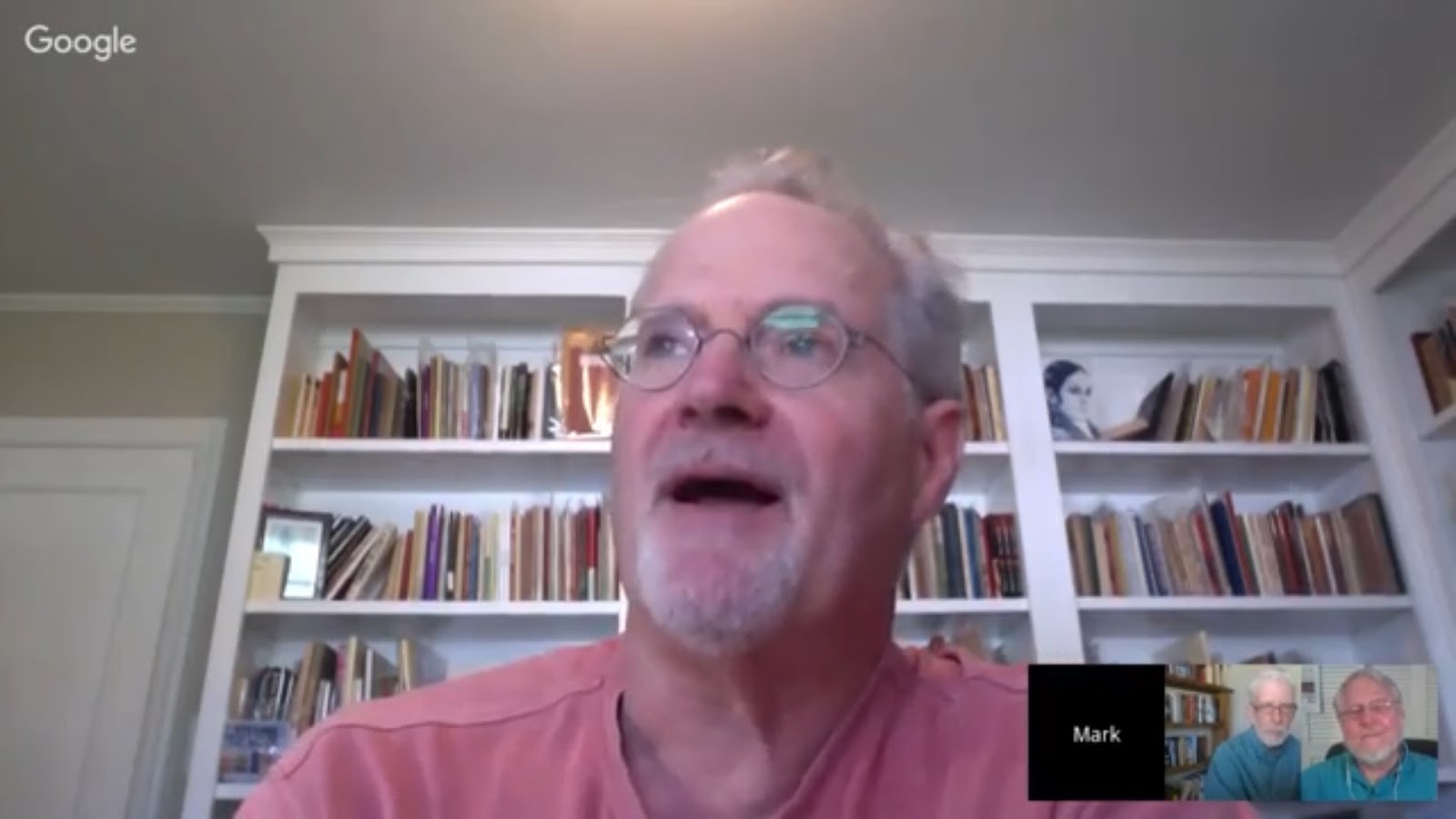
Hillsborough, NC’s Mark Alexander’s rare book turf is literary firsts, especially poetry, important fiction, fine printing and publishing ephemera; with a particular interest in signed/inscribed books, association copies, books by and about Vladimir Nabokov, and advanced and uncorrected proof copies. About ⅔ of his 8000-volume inventory is poetry, he says.


» 19th C
» African-American
» Avant Garde
» Beat
» Biography/Bibliography
» Black Mountain
» British
» British/Scottish
» Broadsides/Art
» Canadian
» catalog1
» Contemporary
» Early 20th C
» Ephemera
» Experimental/Concrete
» Fiction
» Fine Press
» Formalist/New Formalist
» Graphic Novel/Comic
» Haiku/Asian
» Irish
» Letters/manuscripts
» Literary Journals
» Mid-Century
» Modern Literature
» Moderns
» Native American
» New York School
» Objectivist
» Play
» Poetry
» Publishing Ephemera/History
» Punk/Rock
» Radical
» San Francisco Renaissance
» Small Press
» Southern
» Vladimir Nabokov
» War Poets
» World

We’re looking forward to talking with him about these, and many other things, this Saturday, February 3rd’s Rare Book Cafe!

Rare Book Cafe is streamed every Saturday from 2.30 to 3.30 pm EDT. We feature interviews, panel discussion and stuff you can learn about book collecting whether you are a regular at Sotheby’s or just someone who likes books.

The program airs live on Rare Book Cafe’s Facebook page, and remain there after the show.

The program’s regular guests include Miami book dealer, appraiser and WDBFRadio.com’s Bucks on the Bookshelf radio show creator Steven Eisenstein, Thorne Donnelley of Liberty Book Store in Palm Beach Gardens, Florida; Lindsay Thompson of Charlotte’s Henry Bemis Books; miniature books expert Edie Eisenstein;  and program creator/producer T. Allan Smith.

We enjoy the support and encouragement of these booksellers:A Bric-A-Brac in Miami;  Little Sages Books in Hollywood, Florida; Liberty Books in Palm Beach Gardens; As Time Goes By, in Marion, Alabama; Quill & Brush in Dickerson, Maryland; Lighthouse Books in St. Petersburg; The Ridge Books in Calhoun, Georgia; A-Bric-A-Brac in Miami Beach; and Henry Bemis Books in Charlotte.

 Rare Book Cafe program encourages viewer participation via its interactive features and video: if you've got an interesting book, join the panel and show it to us! If you’d like to ask the team a question or join us in the virtual live studio audience for the program, write us at rarebookcafe@gmail.com.